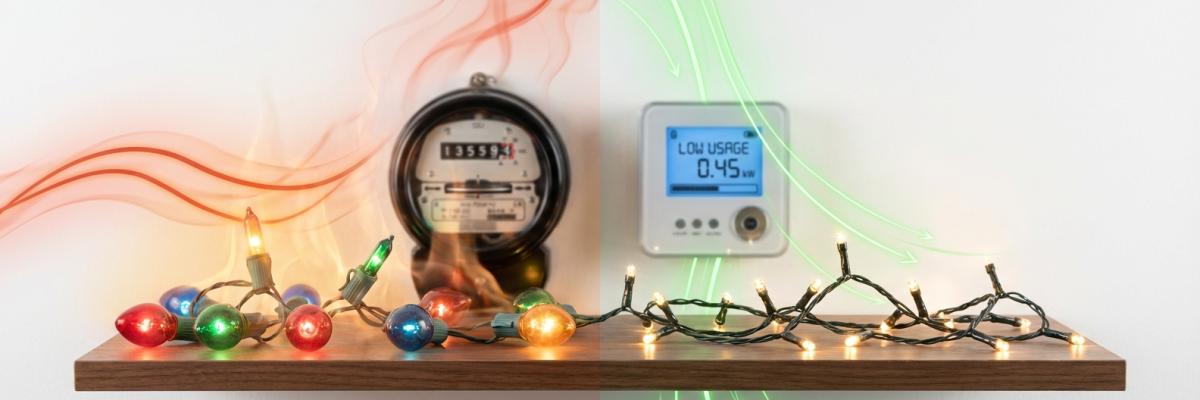

The festive season is almost here, and for many, that means getting ready to deck the halls with twinkling lights. There’s nothing quite like a dazzling display to bring cheer to your home and neighbourhood. However, with rising energy costs in the UK, the thought of powering those festive decorations can bring a chill colder than any winter’s day.
Are you worried about how much your Christmas lights will add to your energy bill? You're not alone. Many UK energy customers are looking for smart ways to save money without sacrificing the festive spirit. The good news is that by making a few informed choices, you can enjoy a bright Christmas without the bill shock. Let's crunch the numbers and see how LED Christmas lights stack up against their traditional counterparts.
The Traditional Incandescent Bulb: A Costly Glow
Before LEDs became commonplace, traditional incandescent bulbs were the go-to for Christmas lights. These bulbs produce light by heating a filament until it glows. While they emit a warm, nostalgic glow, they are notoriously inefficient. A significant portion of the energy they consume is converted into heat, not light, making them quite expensive to run.
Consider a typical string of 100 old-fashioned incandescent Christmas lights. Such a string can consume anywhere from 400 to 1000 watts (0.4 to 1 kilowatt) of electricity. If you run a 1000-watt string for, say, five hours a day for 30 days during the festive period, that's 150 kilowatt-hours (kWh). At an average electricity cost of around 28p per kWh (prices vary by region and tariff), that single string could cost you approximately £42.
The LED Revolution: Brightness Without the Bite
Enter LED (Light Emitting Diode) Christmas lights. These modern marvels have transformed festive decorating by offering incredible energy efficiency. LEDs don't rely on heating a filament; instead, they produce light through the movement of electrons in a semiconductor material. This process is far more efficient, meaning they use significantly less electricity and produce very little heat.
How much less? A comparable string of 100 LED Christmas lights might consume only 5 to 10 watts (0.005 to 0.01 kilowatt) of power. Using the same example of five hours a day for 30 days, a 10-watt LED string would consume just 1.5 kWh. At 28p per kWh, the cost would be a mere £0.42! That's a staggering saving of over £40 compared to the incandescent option for just one string of lights.
Beyond the Bulbs: Smart Lighting & Energy Habits
Switching to LEDs is arguably the biggest step you can take to reduce the cost of your Christmas lights, but there are other practical, actionable tips to further maximise your energy savings:
- Use Timers: Invest in a simple timer for your lights. Set them to come on when it gets dark and switch off automatically a few hours later, or before you go to bed. There's no need for lights to be on all night.
- Solar-Powered Lights: For outdoor displays, consider solar-powered LED lights. They charge during the day and illuminate your garden for free at night, completely cutting them off your electricity bill.
- Be Selective: Do you need every corner of your home to be illuminated? Focus your display on key areas that will have the most impact.
- Unplug When Not In Use: Even when switched off, some lights can draw a tiny amount of 'phantom' power. Unplug them completely when your display isn't active.
- Smart Meters: If you have a smart meter, use it to track your energy consumption in real-time. This can help you understand exactly how much energy your festive display is using and identify areas for improvement.
Maximising Your Savings with Your Energy Supplier
While optimising your festive lights is a great start, the biggest impact on your overall energy bills comes from your choice of energy supplier and tariff. Many UK energy customers are looking for providers that offer competitive rates, excellent customer service, and a commitment to renewable energy.
Octopus Energy, for instance, is a popular choice known for its focus on smart tariffs and 100% renewable electricity for all its customers. They provide a range of innovative tariffs designed to help people save money and manage their energy use more effectively. If you're looking to make bigger savings on your energy bills and align with a company committed to greener energy, switching to a provider like Octopus Energy could be a smart move. Plus, you can often get a bonus when you switch!
If you're considering a change, you can sign up using this link for a bonus of £50 credit directly applied to your new Octopus Energy account. It’s a great way to kickstart your savings beyond just your Christmas lights.
Conclusion: A Brighter, Cheaper Christmas
The choice between LED and traditional Christmas lights is clear: LEDs offer significant energy savings, making your festive display far more affordable to run. By combining the power of energy-efficient LEDs with smart lighting habits, you can create a beautiful and joyful atmosphere without the worry of excessive energy bills.
And remember, your festive savings are just the beginning. By making informed choices about your energy supplier and embracing more energy-efficient practices throughout your home, you can continue to save money all year round. Enjoy a bright and financially comfortable festive season!