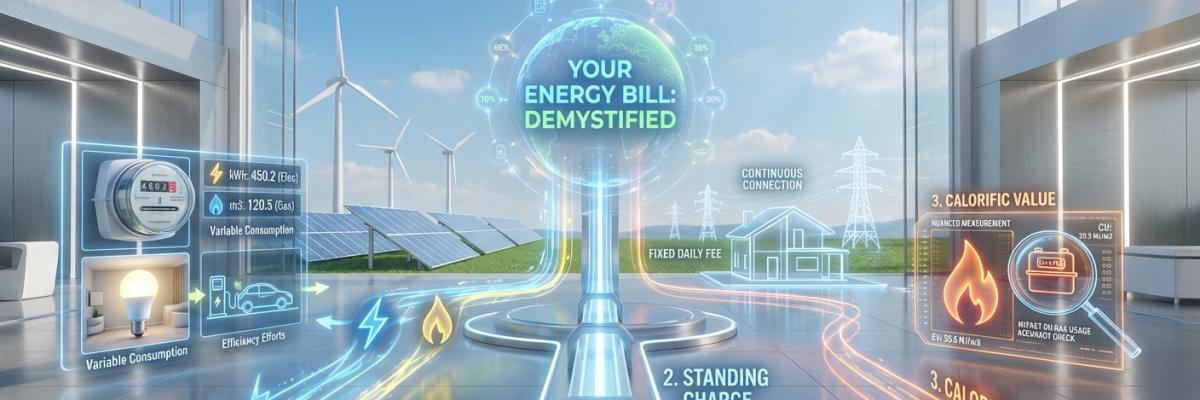

Understanding your energy bill can feel like deciphering a secret code. But once you grasp the basics, comparing tariffs and making smart choices to save money becomes much clearer. Here in the UK, your bill is primarily made up of two main components: the Unit Rate and the Standing Charge. For gas customers, there's also a subtle but important factor called 'Calorific Value'. Let's break these down to empower you with the knowledge needed to manage your energy costs effectively.
The Unit Rate: What You Use
The Unit Rate is arguably the most straightforward part of your bill. This is the price you pay for each unit of energy you consume. For electricity, it's measured in kilowatt-hours (kWh), and for gas, it's also measured in kWh, though it's converted from cubic meters or cubic feet. Essentially, the more energy you use – whether it's powering your lights, heating your home, or charging your devices – the higher your bill will be, as each unit adds to the total at this specific rate.
- Varies by Tariff: Different energy suppliers and tariffs will offer different Unit Rates.
- Time of Use: Some tariffs, especially smart tariffs offered by providers like Octopus Energy, might have varying Unit Rates depending on the time of day, encouraging usage during off-peak periods when energy is cheaper.
- Direct Impact: This is where your efforts to reduce consumption (e.g., turning off lights, insulating your home) directly translate into savings.
The Standing Charge: Your Daily Connection Cost
Unlike the Unit Rate, the Standing Charge is a fixed daily fee that appears on your bill regardless of how much energy you use. Think of it as the cost of being connected to the energy network. This charge covers various operational expenses for your energy supplier and the wider energy infrastructure.
- Network Maintenance: It contributes to the upkeep of pipes, wires, and other infrastructure that brings energy to your home.
- Meter Reading & Billing: Covers administrative costs like meter maintenance, reading, and sending out your bills.
- Policy Costs: Helps fund government initiatives, such as support for renewable energy projects or assistance for vulnerable customers.
- Daily Fixed Cost: Even if you go on holiday and use no energy, you'll still incur the daily Standing Charge.
Calorific Value: The Quality of Your Gas
If you're a gas customer, you might have spotted 'Calorific Value' on your bill or seen it mentioned. This term refers to the quality or energy content of the gas supplied to your area. Gas isn't always uniform; its energy density can vary slightly depending on its source and composition. Instead of just measuring the volume of gas you use (e.g., in cubic meters), the Calorific Value is applied to ensure you're only billed for the actual energy content you receive.
- Conversion Factor: It's a factor used to convert the volume of gas measured by your meter into the kWh figure that appears on your bill.
- Regional Variation: Calorific Value can vary from region to region and even day to day, but these changes are usually small and accounted for by your supplier.
- Fair Billing: It ensures fairness, meaning you pay for the actual amount of energy extracted from the gas, not just the volume.
Comparing Tariffs Effectively: Beyond the Headline Price
Now that you understand these components, you can compare energy tariffs much more effectively. Many people only look at the Unit Rate, but the Standing Charge plays a significant role, especially for low energy users. If you use very little energy, a tariff with a low Standing Charge but a slightly higher Unit Rate might be cheaper overall than one with a high Standing Charge and a very low Unit Rate.
When comparing:
- Consider Your Usage: Estimate your annual kWh usage for both electricity and gas.
- Calculate Total Costs: Multiply your estimated usage by the Unit Rate, then add the Standing Charge multiplied by 365 days.
- Factor in Green Credentials: Many customers also consider the source of their energy. Octopus Energy, for example, is known for supplying 100% renewable electricity and offering transparent, competitive tariffs.
How Octopus Energy Simplifies Your Bill
Octopus Energy has built a reputation for making energy simpler and more transparent for its customers. They provide clear breakdowns of Unit Rates and Standing Charges on their bills, helping you understand exactly what you're paying for. They also offer a range of innovative tariffs, including smart tariffs like 'Tracker' and 'Agile', which can significantly reduce costs for those willing to adapt their energy usage to market prices or off-peak hours.
Switching to a provider that values transparency and offers diverse tariffs can lead to substantial savings. If you're considering a move, you can get £50 credit with this referral link when you sign up with Octopus Energy, giving your savings a healthy boost right from the start.
Practical Tips to Save Money
- Monitor Your Usage: Use a smart meter in-home display to see real-time consumption and identify energy-hungry appliances.
- Embrace Smart Tariffs: If Octopus Energy offers time-of-use tariffs in your area, consider shifting high-usage activities (like charging EVs or running dishwashers) to off-peak hours.
- Improve Home Efficiency: Simple measures like draught-proofing, upgrading insulation, and using energy-efficient appliances can reduce your Unit Rate costs.
- Regularly Review Tariffs: Your energy needs change, and so do market prices. Regularly check if your current tariff is still the best fit for you.
Conclusion
No longer should your energy bill be a mystery! By understanding the Unit Rate, Standing Charge, and the specific nuance of Calorific Value for gas, you gain the power to make informed decisions. This knowledge empowers you to compare tariffs accurately, choose a supplier like Octopus Energy that aligns with your values and budget, and actively work towards lowering your energy costs. Take control of your energy bills today and start saving!